



Table of Contents
The first mistake people make with a rescue Chihuahua is expecting gratitude to look like cuddles. Sometimes safety looks like hiding under a blanket for three days.
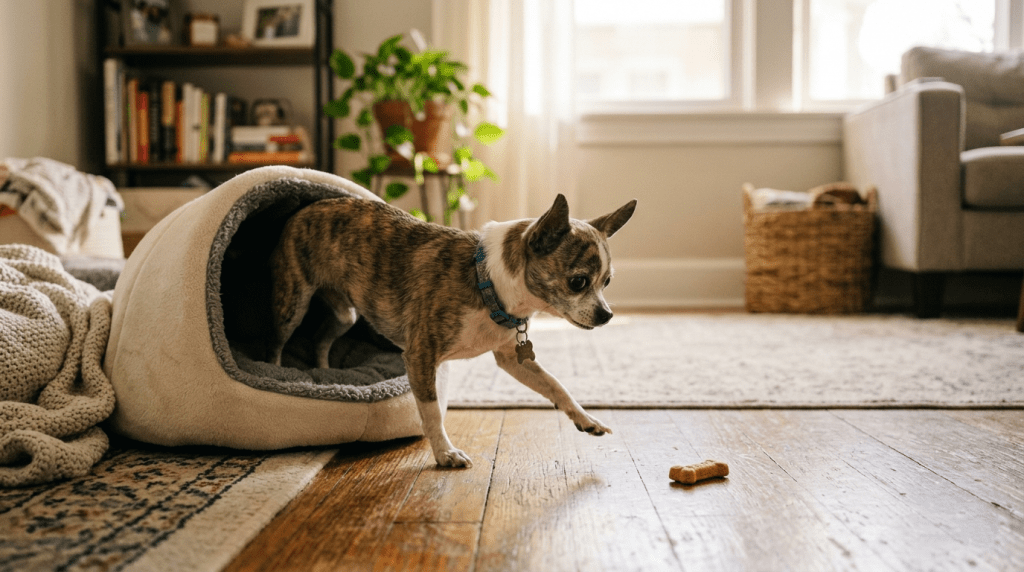
That blanket fortress usually means your new dog is doing exactly what feels safest. For a small dog who recently lost every familiar smell, sound, and human, a quiet hiding spot can be the most sensible decision they know how to make. The reassuring part is that the first 30 days with a rescue Chihuahua tend to follow a fairly predictable shape. Once you understand it, you can stop worrying that something is broken and start helping your little dog settle in at their own pace. Remember, the first 30 days with a rescue should be treated as a critical period for building trust.
Why the First 30 Days with a Rescue Matter
The early weeks set the tone for how safe your Chihuahua learns to feel in their new home. Tiny dogs experience the world as loud, fast, and full of giant feet, and a rescue Chihuahua may arrive carrying a history you will never fully know.
Many trainers and shelters describe a widely used decompression guideline (the “3-3-3” rule) that owners find helpful: roughly the first three days to feel overwhelmed, around three weeks to start settling into a routine, and closer to three months to feel genuinely at home. Treat this as a loose map rather than a promise, because every rescue dog moves on their own schedule. A Chihuahua from a calm foster home may relax in days, while a dog from a hoarding case or a long shelter stay may need much longer.
Days 1–3: Quiet and Safety
The goal for the first few days is simple: lower the pressure and let your Chihuahua observe. This is not the moment for visitors, parties, or a tour of the neighborhood.
- Set up a small, defined space with a cozy bed, a blanket that can be washed, and easy access to water.
- Let your dog approach you instead of reaching for them, especially around the head.
- Keep your voice soft and your movements slow and predictable.
- Offer food in a quiet area and stay relaxed if appetite is low for a day or two.
- Skip the bath, the new-harness photoshoot, and the long car rides for now.
If your Chihuahua chooses to spend most of these days tucked into a corner, that can be healthy progress. A dog who feels safe enough to rest is a dog beginning to trust the room they are in. Learning how to read your Chihuahua’s body language early can help you tell the difference between calm rest and real distress.
Week 1: Routine and Observation
Once the initial shock softens, gentle structure becomes your best tool. Predictable meals, potty breaks, and quiet time help a rescue Chihuahua understand that good things happen on a schedule, which lowers the guesswork that fuels anxiety.
Potty expectations deserve patience this week. A nervous or previously neglected small dog may have accidents, may not understand house training yet, or may be afraid to go outside at all. Calm consistency works far better than frustration. Take your Chihuahua to the same spot, reward success quietly, and clean up mistakes without drama.
Use this week to observe rather than correct. Notice what startles your dog, where they like to hide, which textures and foods they enjoy, and how they signal that they have had enough. These small details become the foundation for everything that follows.
Weeks 2–3: Gentle Confidence Building
By now many rescue Chihuahuas start showing flashes of personality, and that is worth celebrating. This is a good stage to slowly widen their comfort zone while keeping their safe space available at all times.
- Introduce short, reward-based handling sessions and pair them with treats.
- Add gentle enrichment like a snuffle mat, a soft chew, or a simple food puzzle to build confidence.
- Let other family members offer treats from a relaxed distance so trust can spread beyond one person.
- Keep new experiences brief, and end them before your dog gets overwhelmed.
As you work through the first 30 days with a rescue, allow your Chihuahua to express their personality in a safe environment.
Clinginess is common at this stage, and a little of it is normal as your Chihuahua decides who their people are. If the attachment starts to look like panic when you leave the room, it may help to read up on Chihuahua separation anxiety and begin building independence gently.
Week 4: Slowly Expanding the Dog’s World
The fourth week is when many rescue Chihuahuas are ready for a bit more of the outside world, always on their terms. Short walks in quiet areas, a calm visit from one trusted friend, or a low-key car ride can all be good tests of how far your dog has come.
Watch your Chihuahua’s signals closely and let them set the pace. A dog who freezes, tucks their tail, or tries to retreat is telling you the world got too big too fast, and there is no harm in scaling back. Confidence built slowly tends to last. A thoughtful safe space for an anxious dog remains just as important now as it was on day one.
Common Mistakes in the First Month
In the first 30 days with a rescue, it’s normal for your Chihuahua to be clingy as they adjust to their new home.
Most early missteps come from love and excitement rather than carelessness. A few patterns show up again and again with new rescue Chihuahua owners.
When expanding your dog’s world in the first 30 days with a rescue, ensure each new experience is positive and calm.
- Inviting too many people over too soon, which overwhelms a dog still learning the basics of the household.
- Picking up a frightened Chihuahua before they are comfortable being handled, which can set back early trust.
- Expecting affection on day one and feeling discouraged when it does not arrive yet.
- Punishing fear-based behavior such as hiding, grumbling, or accidents, which usually increases anxiety.
- Skipping the safe space because the dog “seems fine,” then losing progress during a stressful moment.
Understanding why Chihuahuas are far more than accessories makes these early weeks easier, because it reframes the so-called drama as a small dog working hard to feel safe. For a real-world reminder of how far patience can carry a frightened little dog, the story of a senior foster Chihuahua who refused to let her rough past define her is worth a read.
Common mistakes in the first 30 days with a rescue include overwhelming them with too much attention too soon.
When It May Help to Get Professional Support
Patience handles most of the early bumps, and many rescue Chihuahuas blossom with nothing more than time and routine. Some signs, though, are worth a professional’s eyes sooner rather than later.
Consider speaking with a veterinarian or a qualified behavior professional if you notice sudden behavior changes, signs of pain, refusal to eat for more than a day or two, repeated vomiting, extreme lethargy, severe panic, or aggression that escalates instead of easing. The AVMA’s overview of animal emergencies that warrant immediate veterinary care is a useful reference if you are unsure. A vet can rule out medical causes that sometimes hide behind “bad behavior,” and a force-free trainer or veterinary behaviorist can help with fear, reactivity, or separation distress that is not improving on its own. Asking for help early is part of responsible rescue care.
The first 30 days with a rescue is about patience, understanding, and helping them feel secure in their new environment.
The Chi Society Takeaway
A rescue Chihuahua’s first month is less about big milestones and more about quiet, steady proof that the world has finally become safe. Some little dogs arrive ready to climb into your lap, and others need weeks of watching from a blanket cave before they decide you are worth trusting. Both versions are doing their best with the history they carry.
When you slow down, protect their safe space, and let progress happen on Chihuahua time, you give a small, overlooked dog something they may have never had: a calm home where they finally get to relax.
Join The Chi Society Pack for free to get Chihuahua stories, tiny-dog tips, rescue updates, product picks, and community questions sent straight to you.
This article is for general educational purposes and is not a substitute for veterinary or professional behavior advice. If your Chihuahua shows sudden behavior changes, signs of pain, appetite loss, breathing trouble, injury, or escalating aggression, please consult a veterinarian or qualified behavior professional.
Frequently Asked Questions
How long does it take a rescue Chihuahua to adjust?
Every dog is different, but many follow a loose decompression pattern of roughly three days to feel less overwhelmed, around three weeks to settle into a routine, and about three months to feel fully at home. A Chihuahua from a calm foster may relax faster, while one from a hoarding case or long shelter stay may need more time.
Why is my rescue Chihuahua hiding so much?
Hiding is a common and often healthy coping behavior in the early days. A small dog in an unfamiliar home may feel safer in an enclosed spot while they learn that the new environment is predictable. Give them a quiet retreat and let them come out on their own.
Should I pick up my new rescue Chihuahua a lot to bond?
It may help to let your Chihuahua approach you first. Frequent handling before a frightened dog is comfortable can set back trust. Sit nearby, offer treats, and let closeness build at their pace, especially in the first couple of weeks.
My rescue Chihuahua won’t eat. Is that normal?
A reduced appetite for a day or two during the stress of a move can be common. If your dog refuses food beyond that, seems lethargic, or shows any signs of illness, contact your veterinarian, since appetite loss can have medical causes.
When should I start training a rescue Chihuahua?
Gentle, reward-based structure can begin right away through routines and calm handling, but formal training usually goes better once your dog feels safe, often around weeks two to four. Keep sessions short, positive, and pressure-free.

